A dependable show starts well before soundcheck. Bands and small venues already inspect cables, confirm the input list, test monitors, and make sure every case reaches the room. A product recall check belongs in that same preparation routine, especially when a setup includes powered speakers, amplifiers, chargers, wireless systems, power strips, lighting, or effects equipment.
A recall check does not replace a physical inspection, qualified electrical work, or the instructions supplied with the equipment. It adds another useful layer: matching the manufacturer, model, and identifying numbers on the gear against current official notices. The process is easier when the details are recorded before the stage is busy.
Why Recall Checks Belong in Show Preparation
Touring equipment changes hands and locations frequently. It may be packed tightly, stored between shows, borrowed from another band, rented locally, or bought used. Rehearsal rooms and small venues can also accumulate adapters, chargers, extension cords, and older powered equipment from several owners.
That makes identification important. A notice may apply only to certain models, production dates, serial numbers, or lot codes. Searching for a broad product name is not enough; the label on the exact unit is what allows a band or venue to compare its gear with the notice.
Add the check to the same planning process used for a structured band tour checklist. Rehearsal is also a useful time to confirm the process, alongside the setup habits in this guide to productive band rehearsals. The goal is a repeatable routine, not a last-minute search while the audience is entering.
Build a Useful Gear Record
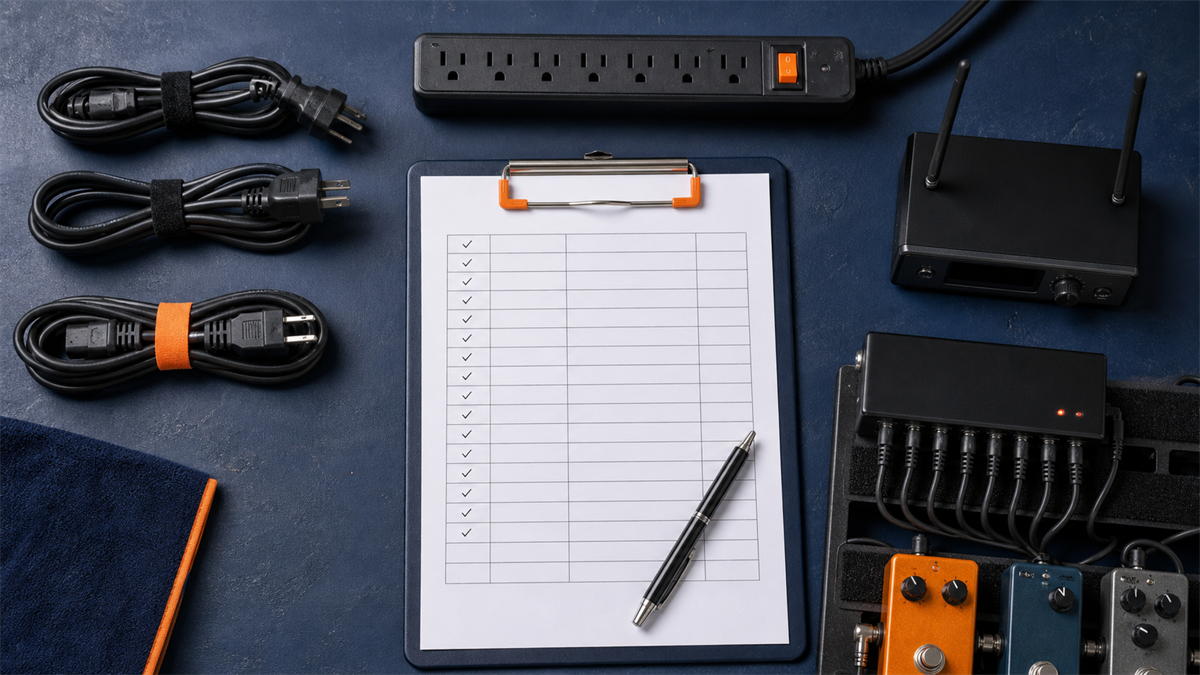
Create a simple inventory for powered equipment and accessories. A spreadsheet, shared document, or venue operations binder is enough. Record:
- Manufacturer and brand: Use the name printed on the product label, not a nickname for the device.
- Full model number: Include suffixes, revisions, or generation labels such as Mk II or V2.
- Serial, lot, and date codes: Copy every identifier that could distinguish one production run from another.
- Purchase or rental source: Note where the item came from and, when known, when it was acquired.
- Current owner or custodian: Identify who can contact the manufacturer or rental company if action is required.
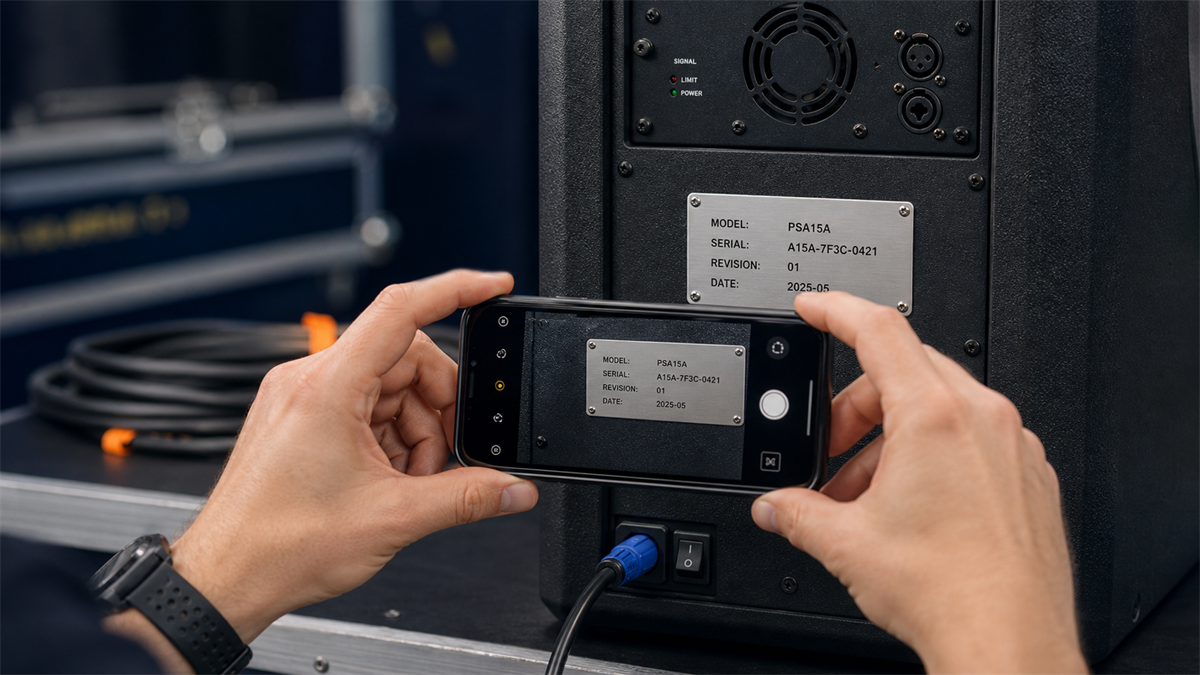
- Clear label photographs: Photograph the whole label and a wider view of the product so the record can be matched to the correct unit.
- Last check date: Record when the item was last compared with official recall information.
Include the equipment that is easy to overlook. The list may cover active speakers, amplifiers, mixers, wireless receivers, transmitters, charging docks, instrument power supplies, pedalboard power units, power strips, extension cords, rechargeable battery packs, fog machines, lighting controllers, and similar powered accessories.
A Six-Step Music Gear Recall Check
1. Inspect Before Searching
Start with the condition of the equipment. Look for damaged insulation, loose plugs, missing grounding pins, cracked housings, discolored connectors, unusual heat, swelling battery packs, or other visible changes. A recall search cannot determine whether a particular unit has been damaged through use, transport, storage, or modification.
Keep the inspection separate from diagnosis. Internal repairs and electrical testing should be handled according to the manufacturer, venue policy, and an appropriately qualified technician.
2. Identify the Exact Unit
Use the product label to confirm the manufacturer, model, serial number, lot code, and date code. If a road case contains several similar power supplies, label each supply so it stays paired with the correct device. Do not assume that products with similar front panels share the same internal design or recall status.
3. Search Official Sources
Search the U.S. Consumer Product Safety Commission recall database for consumer products within its jurisdiction. Recalls.gov provides a one-stop route to recall information from several participating U.S. federal agencies. CPSC also publishes safety education materials that can support a broader equipment-safety routine.
A band can also use a consolidated product recall search as an additional discovery step. Recall Tracker is privately operated, is not a government source, and does not replace the responsible agency, manufacturer, owner, or rental provider. A missing result does not prove that an item is safe or free from a recall.
Search variations of the manufacturer and model, then open the underlying notice rather than relying on a headline or search snippet.
4. Match Every Identifier
Compare the notice with the physical label and your inventory record. Check the full model number, serial or lot range, production dates, photographs, retailer information, and any description of affected units. A notice for a similar model is not automatically a match.
If the notice is unclear, use the manufacturer or agency contact information published with it. Record the question and response so another crew member does not repeat the same uncertain comparison later.
5. Follow the Specific Notice
The applicable notice controls the next step. Recall notices may provide stop-use instructions and may offer a repair, replacement, refund, disposal direction, or updated instructions. Do not invent a remedy, substitute a repair found in a forum, or assume the action for one model applies to another.
When a unit matches, mark it clearly in the inventory and follow the official contact and remedy instructions. Keep confirmation numbers, shipping records, service documents, and photographs with the equipment record.
6. Document the Check
For each item, record the date, sources searched, search terms, result, person who checked it, and any follow-up. A short log helps a tour manager, venue operator, or rental provider understand what was checked and what still needs attention.
Used, Borrowed, and Rented Gear
Secondhand and shared equipment deserves careful identification because paperwork and original packaging may be missing. Before buying used powered gear, ask for a readable photograph of the model and serial label. Compare that information with official notices before the exchange, and keep a copy with the purchase record.
For rented backline, ask the provider how it tracks recalls and how to report a possible match. For borrowed equipment, agree on who will contact the owner or manufacturer if a notice appears relevant. Do not remove ownership labels or modify rented equipment while investigating.
The same discipline helps when assembling a complex rock guitar setup. Record the amplifier, pedalboard supply, adapters, chargers, and wireless units individually instead of treating the full signal chain as one item.
Band and Venue Operations Checklist
- Inspect cables, plugs, housings, batteries, and connectors.
- Photograph each manufacturer label clearly.
- Record the full model, serial, lot, and date codes.
- Search the relevant official recall source and the manufacturer site.
- Compare all identifiers in the notice with the physical unit.
- Record uncertain matches and use the notice’s official contact details.
- Follow the exact remedy and stop-use language in a confirmed notice.
- Update the inventory with the date, checker, result, and follow-up.
- Recheck newly acquired, borrowed, or rented equipment before it enters the show setup.
Frequently Asked Questions
Does an empty search mean the gear is safe?
No. It only means the search did not return a notice that you identified as a match. The search may be incomplete, the terms may be wrong, or the equipment may have a condition unrelated to a recall. Continue normal inspection and maintenance, and check the manufacturer when details are uncertain.
Should a band repair equipment that appears in a recall?
Use the remedy in the specific notice. Some notices arrange repair, replacement, refund, disposal, or new instructions. Do not improvise an electrical repair or assume a general online tutorial satisfies the recall remedy.
What if a rental unit may match a notice?
Pause the comparison long enough to confirm the exact model and serial details, then contact the rental provider using the procedure in the rental agreement. If it is a confirmed match, follow the official notice and the provider’s instructions.
When should the inventory be checked?
Check when equipment is acquired, borrowed, or rented; before a tour or major run of shows; and whenever a new notice or manufacturer communication may affect the inventory. The operating log should show when each unit was last reviewed and which items still need follow-up.
A good recall process is deliberately uneventful. It gives the band and venue a clear record, a reliable way to compare exact equipment identifiers, and a defined path to the official instructions when a match appears.



0 Comments